
What Is a Courier Aggregator and Why Every New Seller Needs One
20 September 2026 · 6 min read · by Courier Uncle team
Every new seller hits this exact moment: the first few orders have come in, you’re genuinely excited, and then it hits you — you actually have to ship these. Where do you even start?
Whether you’re taking your first orders on Meesho, setting up an Amazon seller account, launching a small Shopify store, or moving your local shop online, this guide is for that exact stage. It explains what a courier aggregator actually is, in plain terms, and makes the case for why it matters more for someone brand new than for almost anyone else — not a generic feature list aimed at businesses that already have this figured out.
What Is a Courier Aggregator? (In Plain Terms)
A courier aggregator is a platform that connects you to multiple courier companies through a single dashboard — one login, one wallet, one place to compare rates and book shipments, instead of managing each courier separately.
One thing worth clarifying up front: the aggregator doesn’t deliver your parcel itself. The courier still does that part. The aggregator is the layer that helps you choose the right courier for each shipment, book it, track it, and handle problems — all from one place instead of five.
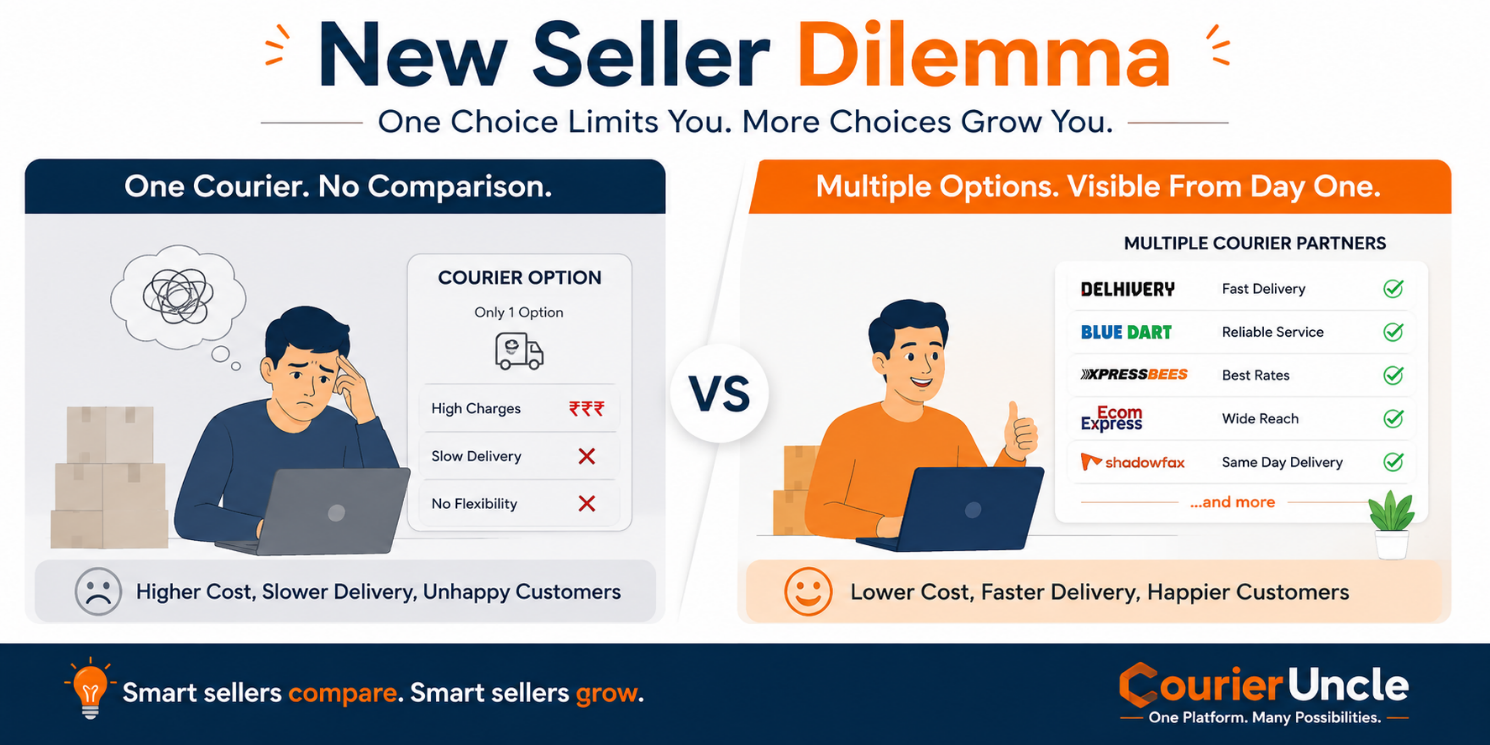
The Problem Every New Seller Runs Into (Without an Aggregator)
Here’s what usually happens without one. A new seller signs up with the first courier they come across — maybe a friend recommended them, maybe they were the first to cold-call. Nothing wrong with that instinct, but it quietly creates three problems.
- No way to know if the rate you’re getting is actually competitive, because you have nothing to compare it against
- No idea whether that courier even covers your buyers’ pincodes well, until an order to a new city arrives late or fails
- Zero negotiating power, since your volume is still small — so you’re stuck with whatever rate you were quoted on day one
This isn’t really a mistake. It’s just the default outcome of not having visibility into other options at the exact moment you needed it most.
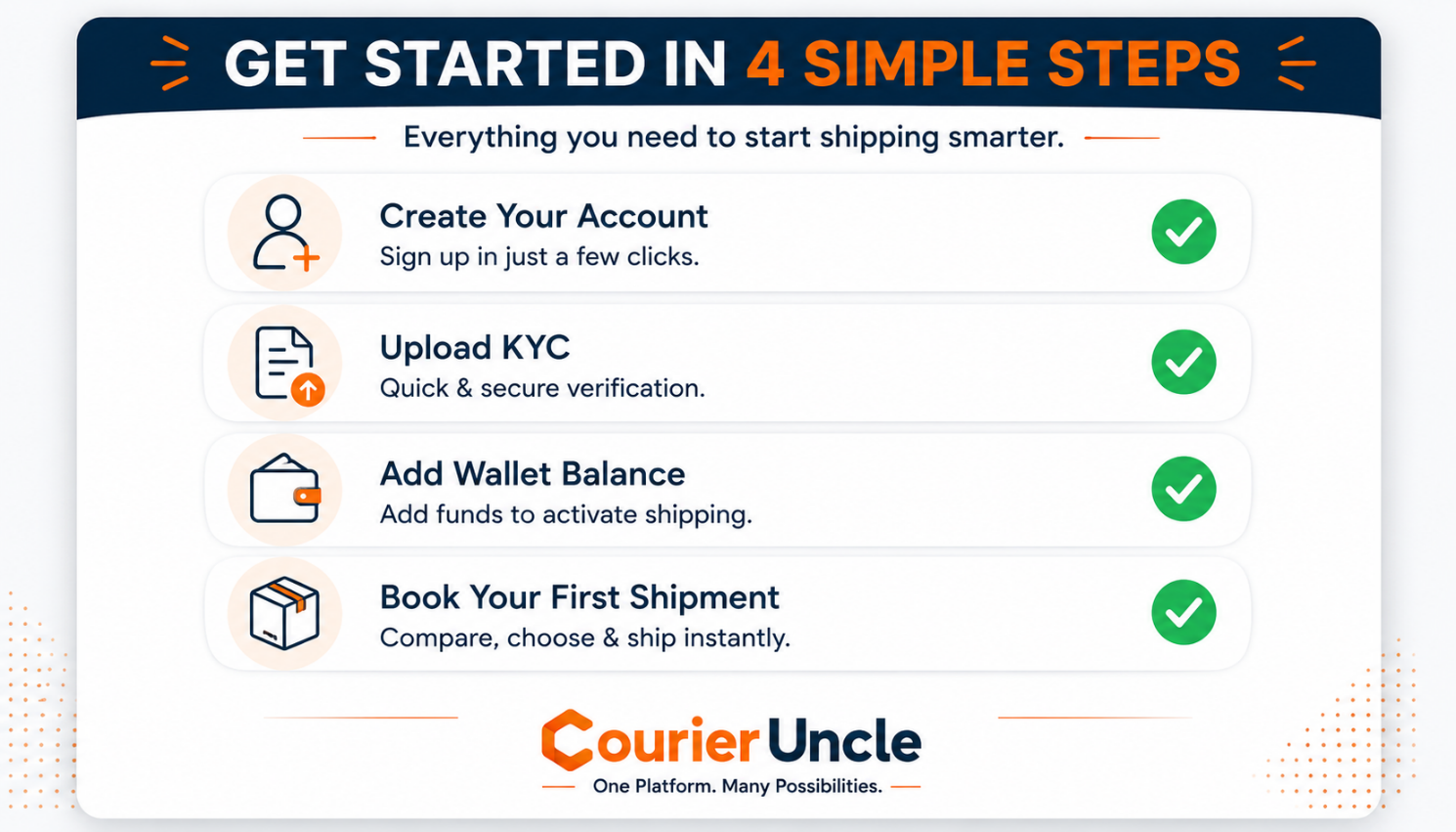
Why a New Seller Needs an Aggregator More Than an Established Business Does
An established seller has usually already learned, often the hard way, which couriers actually work for their routes, and has enough volume to negotiate a bit. A brand-new seller has neither of those things — which means the two biggest risks in shipping, picking a bad courier and overpaying, land exactly when your margins are thinnest and you can least afford either one.
There’s a common mental block worth addressing directly here: “my volume is too low for an aggregator to even care about me.” That’s simply not how the model works. Aggregators pool shipping volume across many sellers, which means you get access to competitive, negotiated rates from your very first shipment — you don’t need to earn that pricing through months of volume first.
That reframes the whole decision. A courier aggregator isn’t something you graduate into once you’re established. For someone just starting out, it’s genuinely the safer place to begin.
What an Aggregator Actually Does for You, Day to Day
- Compares rates across multiple couriers for every shipment, automatically, instead of you checking manually each time
- Keeps one wallet for all your couriers, so you’re not topping up five different accounts
- Gives you one tracking view internally, plus a branded tracking page your buyer sees
- Handles COD remittance on a fixed, predictable schedule
- Follows up on NDR and RTO cases instead of you chasing each courier’s own portal
- Generates labels, invoices, and reports from a single place
None of this is flashy. It’s just the daily friction of running shipping manually, removed.
Free vs Paid Aggregator Models — What New Sellers Should Actually Look For
Aggregators generally work in one of two ways: some charge a fixed monthly fee regardless of how much you actually ship, others charge nothing upfront and make their margin through pooled courier rates instead.
For a brand-new seller with unpredictable, low, or seasonal order volume, a no-fixed-fee model is almost always the safer starting point. Committing to a monthly cost before you even know your real order flow doesn’t make sense yet — that’s a decision worth revisiting once your volume is steady, not before. It’s worth confirming this directly before signing up, since it isn’t always obvious from the homepage.
Single Courier or Aggregator — Where Should You Actually Start?
A single, reliable local courier can genuinely work fine for the first few weeks if your volume is tiny and hyperlocal. But there’s a clear signal worth watching for: the moment your buyers start coming from more than one city or region, or delays and RTO start becoming noticeable, that’s your trigger to move to an aggregator — not a specific order count you need to hit first.
We’ve covered this decision in much more depth here, including a real before-and-after example, if you want the fuller comparison.
What You’ll Need Before Signing Up
- GSTIN — though many aggregators can onboard smaller or unregistered sellers too, depending on the platform, so it’s worth confirming directly rather than assuming you need one
- Your pickup address and basic business details
- A rough estimate of what you’ll be shipping — approximate weight and size is enough, it doesn’t need to be exact
- Bank account details for COD remittance, if you’re offering COD
For a new seller, this usually takes under a day — it’s nothing like a lengthy enterprise onboarding process.
A Quick Note for Meesho and Amazon Sellers
If you’re selling primarily through Meesho or Amazon, some of your shipping may already run through that platform’s own logistics network. An aggregator becomes especially useful the moment you start shipping independently too — your own Instagram or WhatsApp orders, a Shopify store on the side, or bulk B2B orders you’re handling outside the marketplace.
A Real Example: Starting Right vs Starting Wrong
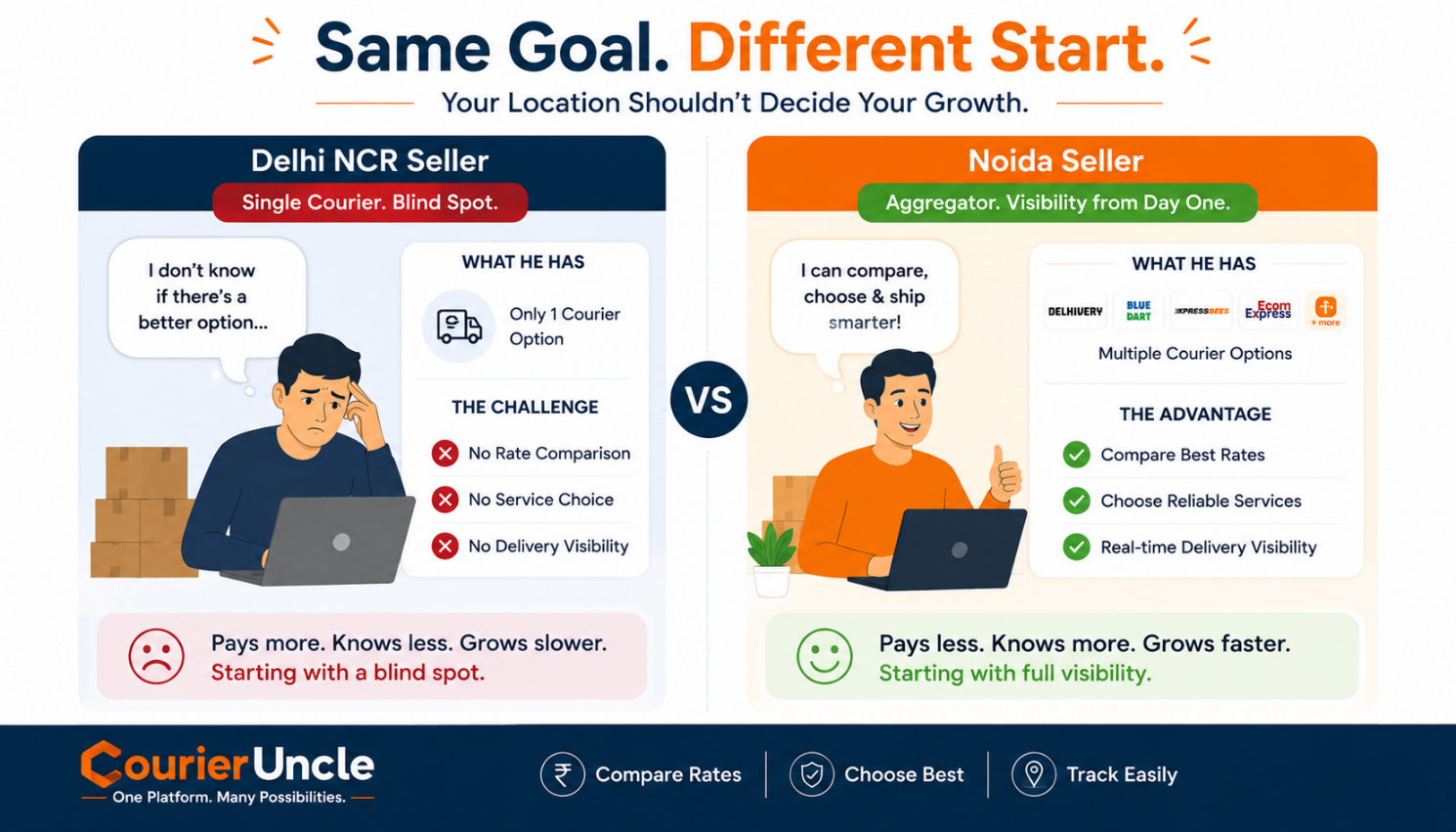
Two home décor sellers started on Meesho around the same time — one in Delhi NCR, one in Noida, both with similar products and similar early order volumes.
The Delhi NCR seller signed up with the first local courier a neighbouring shop recommended. It worked fine for a few weeks, until orders started coming in from Bangalore and Chennai — delivery times to those cities stretched past a week, and she had no easy way to know if a different courier would’ve done better, since she’d never compared.
The Noida seller started directly with an aggregator from her very first shipment. When her own orders started reaching similar cities, she could already see rate and delivery-time differences across courier options for those specific pincodes, and routed accordingly — without ever hitting the blind spot her Delhi NCR counterpart ran into.
Same stage, same product category, same starting order volume. The only difference was whether comparison was built in from day one.
Sign-Up Checklist for New Sellers
Before you commit to any aggregator, run through this quickly:
- No fixed monthly fee, or a model that fits your current order volume
- Pooled rates available from your first shipment, not after a volume threshold
- Confirmed coverage in the cities your buyers are actually in
- A clear, written COD remittance schedule
- Onboarding that doesn’t require documents you don’t yet have
Frequently Asked Questions
Is a courier aggregator worth it if I’m only shipping a few orders a week?
Yes — the value isn’t tied to volume. Even at a handful of orders a week, comparing rates and coverage from the start helps you avoid the blind spots that come from defaulting to one courier without any comparison.
Do I need a GST number to use a courier aggregator?
Not always. Many aggregators can onboard small or unregistered sellers, though this varies by platform, so it’s worth confirming directly with whichever one you’re considering.
Will I get good rates as a new seller with low volume?
Generally yes, since most aggregators pool rates across all their sellers rather than pricing you individually based on your own volume. You’re not expected to “earn” competitive pricing over time.
Should I start with one courier first and switch to an aggregator later?
You can, if your very first few weeks involve tiny, hyperlocal orders. But there’s no real advantage to waiting — starting with an aggregator from day one avoids the blind spots a single courier setup tends to create as soon as your buyers spread out geographically.
Can I use an aggregator alongside Meesho or Amazon’s own shipping?
Yes. It’s especially useful once you start shipping outside the marketplace’s own logistics network — for your own website orders, direct social media sales, or B2B shipments you’re handling independently.
The Bottom Line
A courier aggregator isn’t a tool you graduate into once your business is established. For a brand-new seller with no existing courier relationships, no volume to negotiate with, and the thinnest margins you’ll likely ever run, it’s genuinely the safer place to start — not an upgrade to think about later.
Starting out and want to compare rates from your very first shipment? Sign up free on Courier Uncle — no fixed monthly fee.
Ship smarter with Courier Uncle
Compare live rates across multiple couriers on your actual routes — sign-up is free, no volume commitment.
Compare rates free →